In the building
➜ Follow Development
zcoder
Parallel-first AI coding harness
A parallel-first AI coding harness built in Rust, focused on orchestration, workbench-oriented workflows for production coding.
Why zcoder ?
Most coding harnesses are useful, but they were not designed to maximize AI and human parallelism.
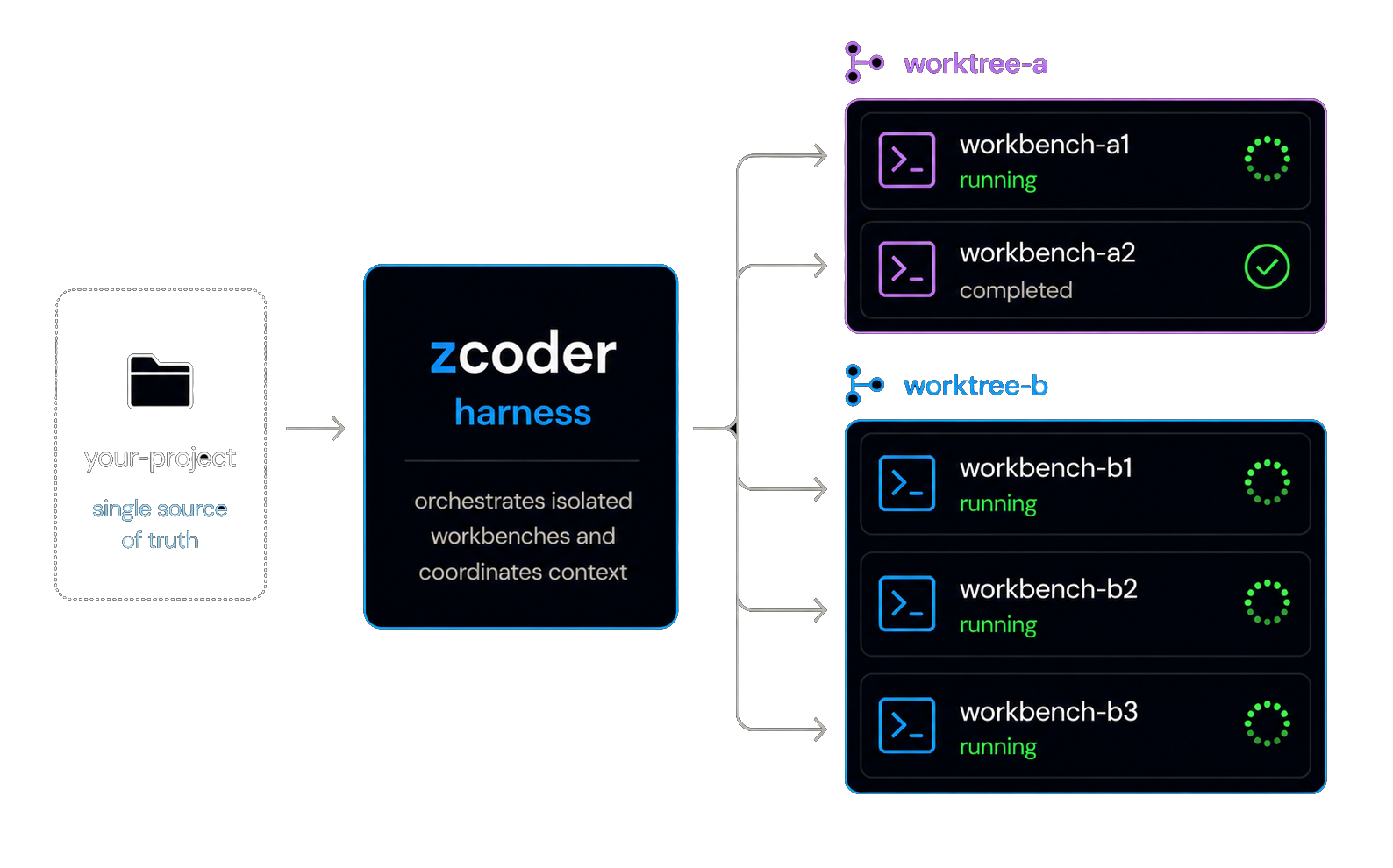
- Parallel Execution Maximize throughput by running multiple coding tasks concurrently.
- Workbench Oriented Key work unit per worktree, built for full work isolation and parallelism.
- Native Worktrees Git worktrees out of the box. Isolation without the overhead.
- Control First Inspect everything. Configure everything. Trust, but verify.
- Performance Native Built in Rust for speed, reliability, and low overhead.
Getting Started
# Built it Rust
cargo install zcoder

# run it
zc

# Right now, just starter code, nothing much 0.0.1
zcoder origins
Why Z ? because I still cannot pronounce th.